The most common reason for weak AI emails is not the AI. It is an offer profile that says "we do marketing for businesses". Nothing specific can come out of that brief, not even from a human. This guide goes through every field with a good and a bad example.
The profile lives per campaign in Colldly. One offer, one target group, one profile. If you sell two different things, create two campaigns.
What I sell: one sentence with an outcome
Not a list of services but a result for the customer. Bad: "Web design, SEO, social media, branding." Good: "Websites with online booking for tradespeople that bring in enquiries from Google." The AI then knows what the first sentence and the ask should be about.
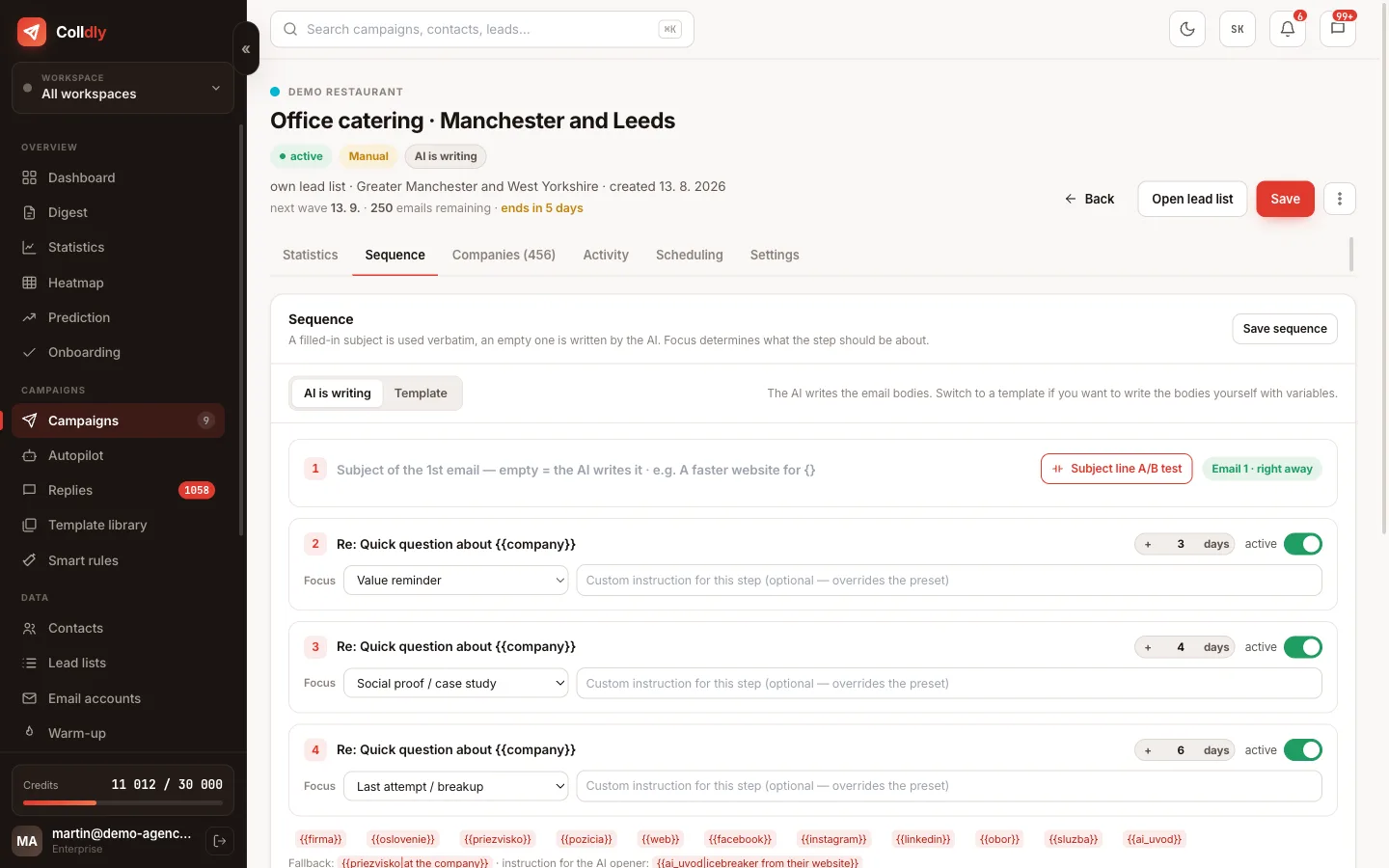
To whom: a target with a situation
Industry, size, area and the situation in which they need you. "Independent garages with 2 to 10 staff that take bookings by phone only." The situation is what the AI uses as the bridge between a fact on the website and your offer.
What makes me different: one thing, not ten
Price, speed, specialisation, guarantee. Pick one that is true and fits in a sentence: "A website in 14 days at a fixed price, copy and photos included." The AI uses it where it fits, not in every email.
Proof: a number, a name, or nothing
"A garage in Leeds took 30% more bookings without hiring anyone for reception." A concrete number from a concrete industry. If you have no proof, leave the field empty. The AI never invents proof, but if you give it vague proof it will use vague proof.
What I want: the smallest possible next step
Not "a meeting" but "a 2-minute video", "a mock-up on your business", "a five-minute call". The smaller the step, the higher the reply rate. The AI turns it into the ask at the end of every email.
Check the preview on three companies
Generate a preview for three different companies from the list: one with a rich website, one with a thin one and one without. If all three emails sound the same, the profile is too generic. If they differ in the first sentence and share the offer, it is right.
- The "what I sell" sentence contains an outcome for the customer
- The target has industry, size, area and situation
- One true differentiator
- Proof with a number, or an empty field
- The ask is the smallest possible step
- The preview on three different companies looks different