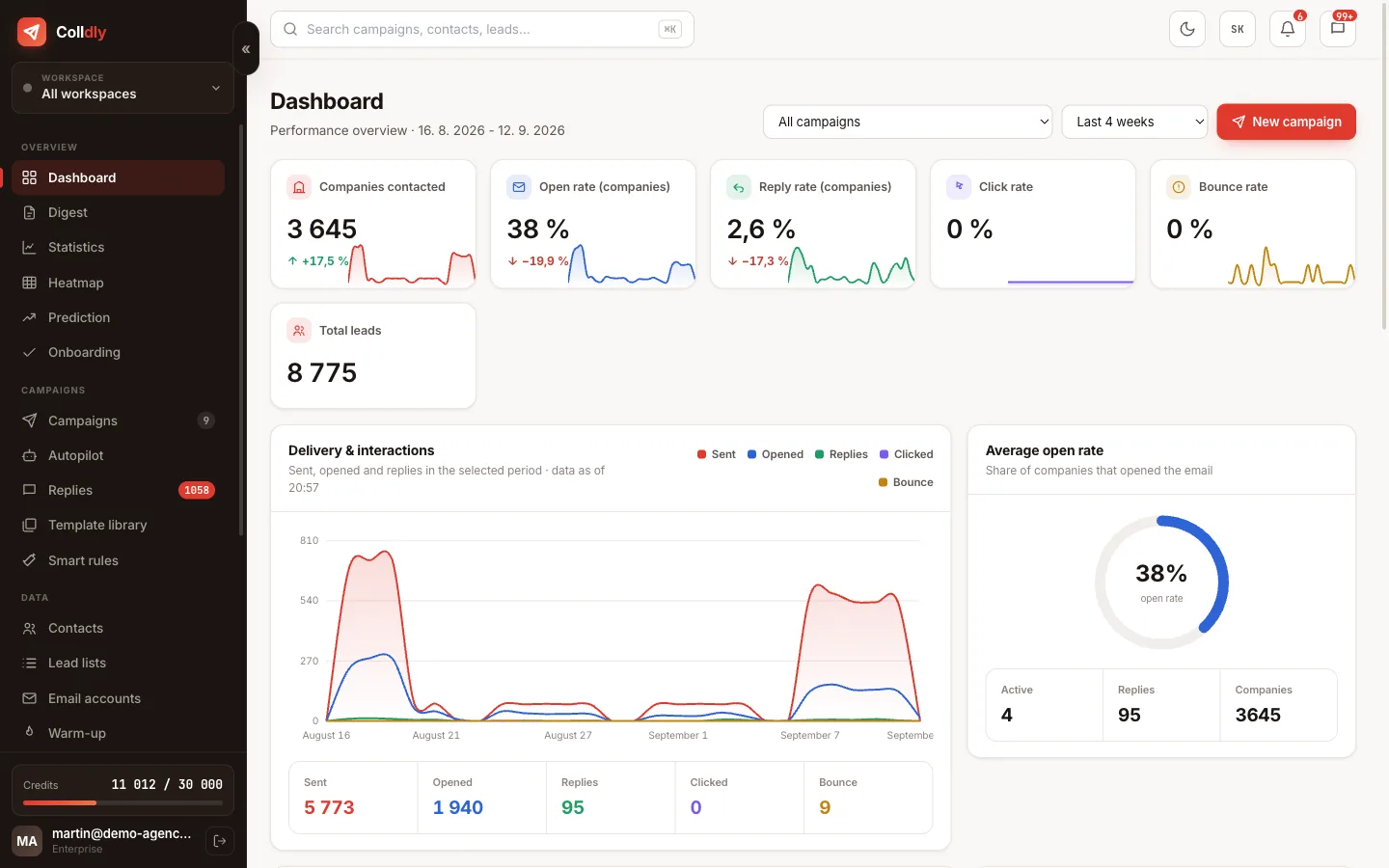
Most cold emails fail before anyone finishes reading them: in the subject line, in the first sentence, or because they talk about the sender instead of the reader. This guide takes the structure apart sentence by sentence and shows at every step how Colldly keeps it.
We are not teaching you to write prettier. We are teaching you to write so that the person on the other side knows after the first sentence that you wrote to them, and after the fourth knows what to do.
Subject line: short and not salesy
Three to five words, no capitals or exclamation marks. The best subject lines look like ordinary work mail: "Question about your deliveries", "Websites for joineries". A subject like "50% OFF TODAY ONLY" is a sure way into spam.
The first sentence is about them, not you
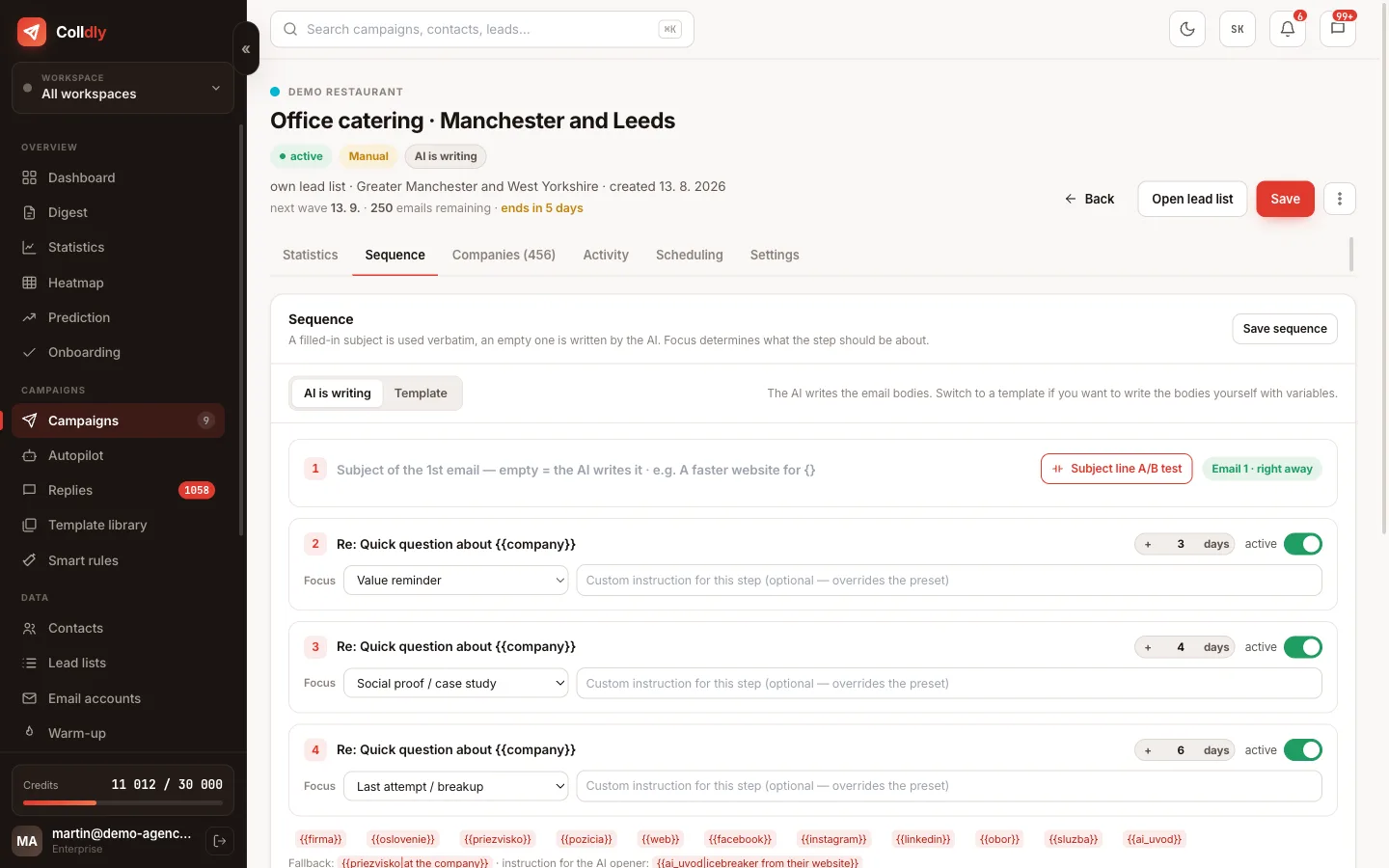
The worst possible opening is "We are a company that…". The first sentence has to show you are writing to them specifically: what the company does, what you noticed about it. This is exactly what AI personalisation does; it pulls a detail from the website worth mentioning.
The offer in one sentence
Say what you do and what they get out of it. Not a list of services but one concrete result: "We build websites that bring tradespeople enquiries from search." No jargon that only your own industry understands.
Proof, if you have it
One sentence with a reference from the same industry or region does more than three paragraphs about your company. "We built a similar site for a joinery nearby." If you have no reference, leave it out rather than invent one.
A call to action that costs nothing
Do not ask for an hour-long meeting. Ask for a reply: "Would a short call make sense?" or "Shall I send a sample?" The smaller the hurdle, the higher the reply rate.
Length and signature
Under 120 words so the email fits on a phone without scrolling. A plain signature: name, company, phone. No images, banners or footers with five links; they hurt deliverability.
Follow-ups build on, they don't repeat
The second email is not "just checking in". Bring a new angle or a concrete sample. The third can be one sentence: "Shall I close this, or get back to you in a few months?" That one is often the most successful.
- The subject line has 3 to 5 words and looks like ordinary work email
- The first sentence contains a fact about the reader's company, not about you
- The offer is one sentence with an outcome, not a list of services
- You have one piece of proof, or you left it out
- One ask that costs nothing
- Under 120 words, plain-text signature, no attachments or links