All guides
8 min read·Intermediate·6 steps·2 screenshotsCopy and sequences

Follow-ups that don't annoy

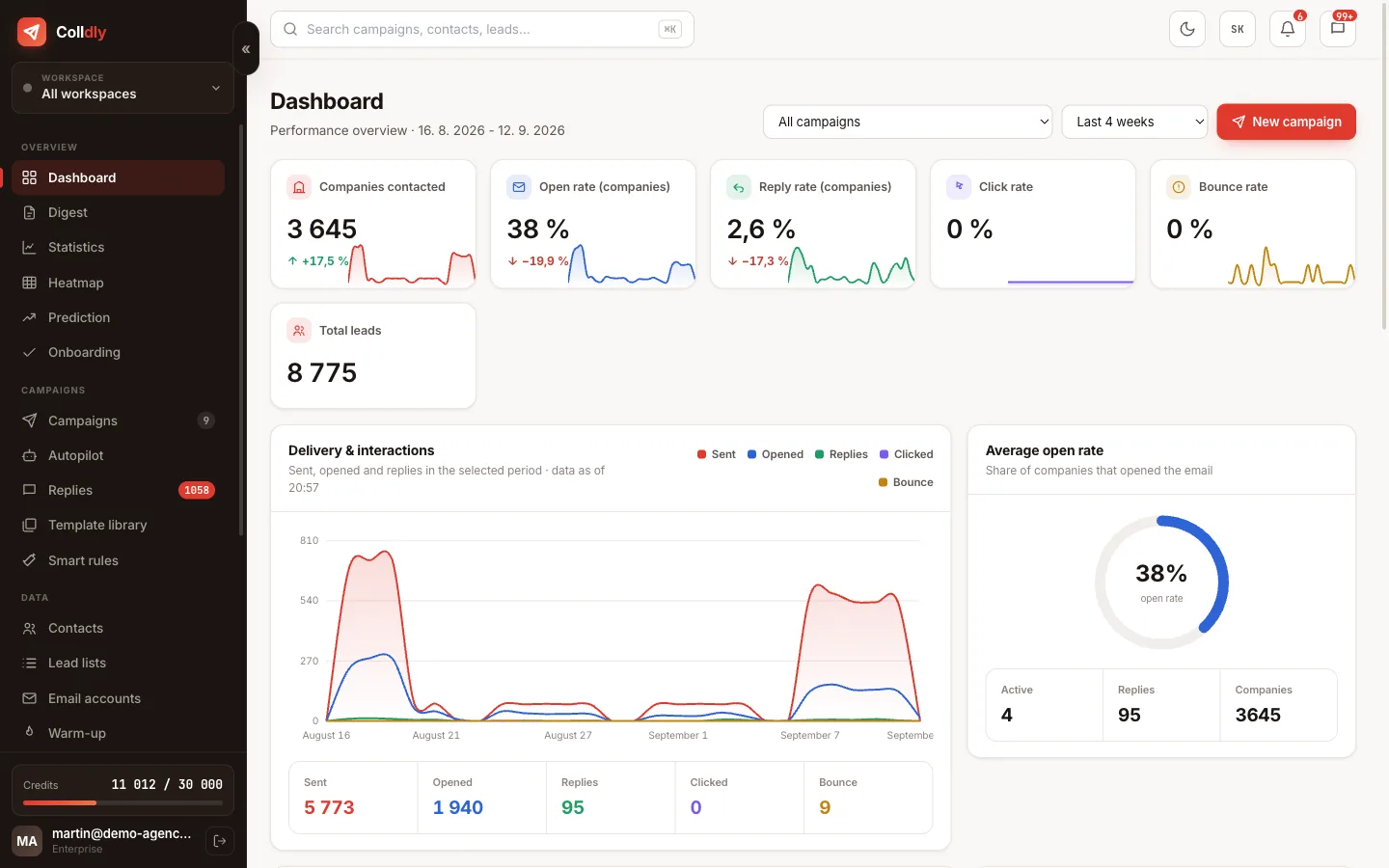
Most replies do not come to the first email. Follow-ups are where a campaign breaks: they either finish the deal or annoy. The difference is whether they bring something new.

The first email opens the topic, follow-ups bring the replies. In Colldly's data most replies arrive on the second and third step. Follow-ups are also where campaigns break: they either close the deal or annoy.

This guide covers the number of steps, the spacing, the thread, the content of each step and stopping the sequence. For every point you see how to set it in the campaign detail.

1

Two to four steps are enough

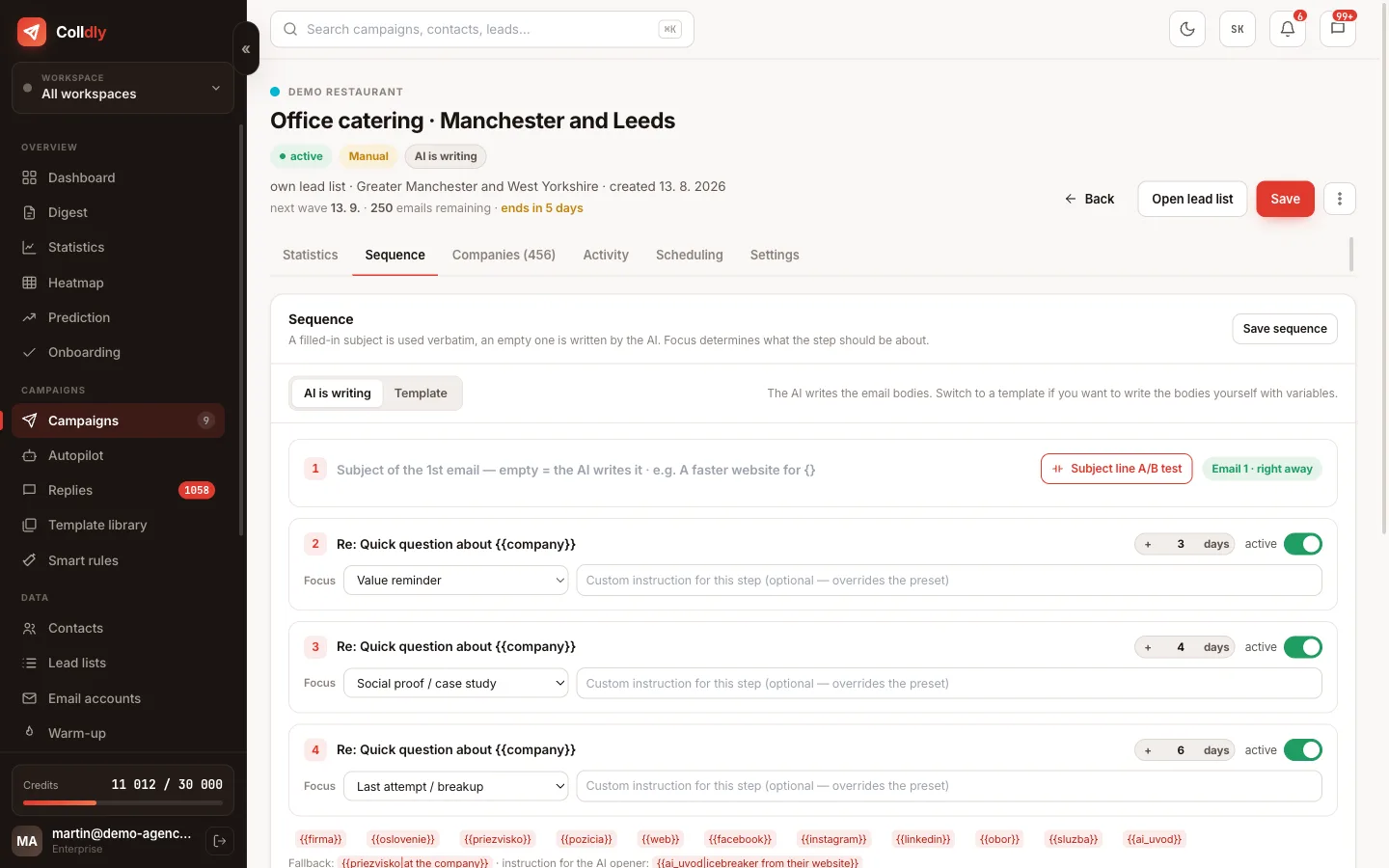
After the first email send two to four follow-ups. Fewer means leaving money on the table, more only annoys and raises unsubscribes.
colldly.com/dashboard › Campaigns
Campaign sequence in Colldly: steps, gaps in days and follow-up focus
2

Gaps of 3, 7 and 14 days

The first follow-up after three days, the second after a week, the third after two weeks. Gradually widening gaps feel natural, not like an automaton.

3

Send in the thread

A follow-up should build on the original message, not arrive as a new email. The recipient sees the context and deliverability is higher.

4

Every step brings something new

Second email: a concrete sample or reference. Third: a different angle on the same problem. Fourth: one sentence and a close. Never write just "checking in".

5

The last step closes

The highest reply rate often comes from a final email like "Shall I close this, or get back to you in a few months?" It offers a polite way to say no, and that is exactly why people reply.

6

A reply must stop the sequence

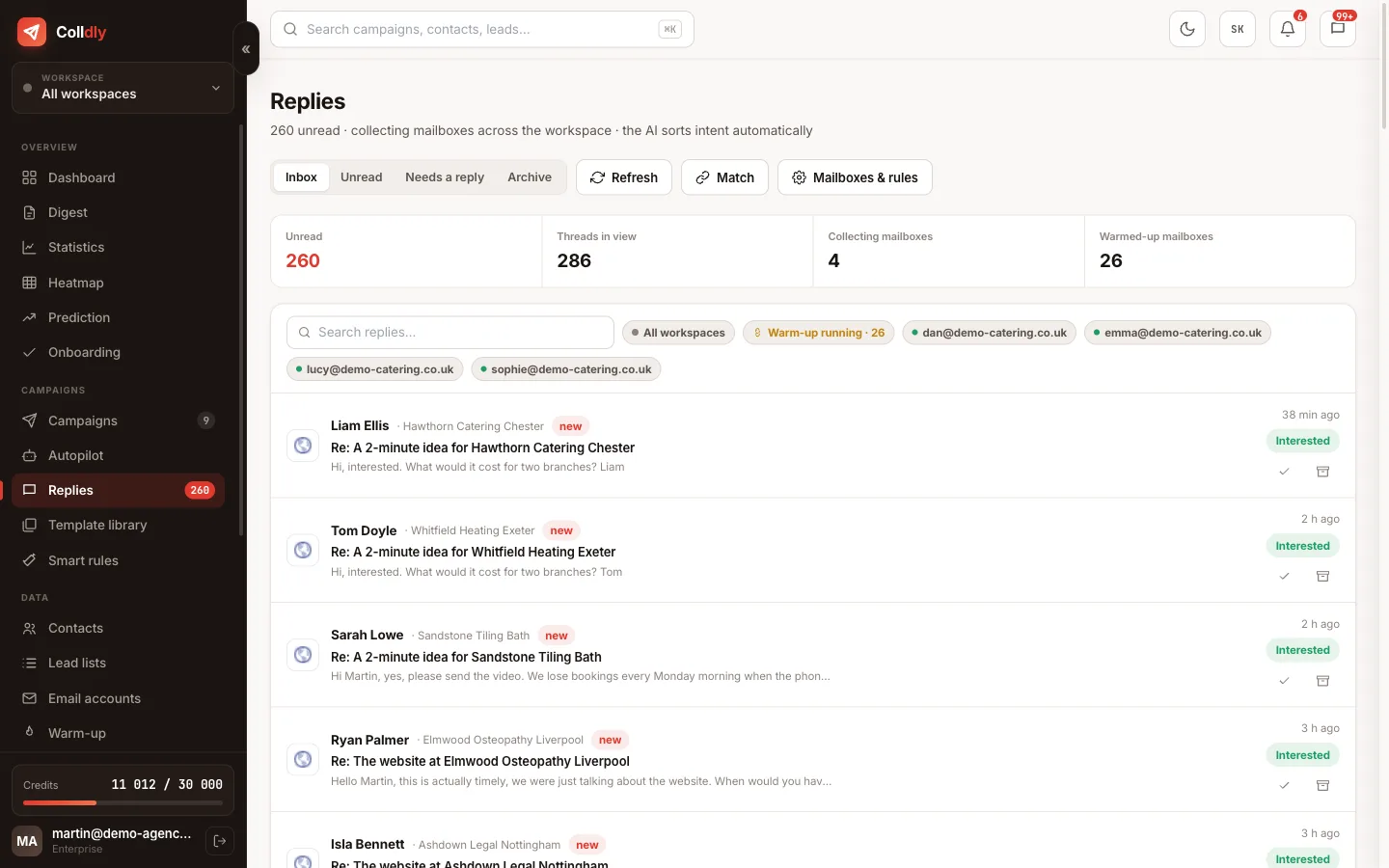
Whoever replied must not get another automatic email. In Colldly the sequence stops by itself, but when you handle replies outside the system, watch out for it.
colldly.com/dashboard › Unibox
Unibox in Colldly: a reply stops the sequence and marks the intent
What to avoid
Eight steps. After the fifth you are the person they block.
"Just checking in". Bring something new or do not write.
Changing the subject line in follow-ups. The thread falls apart.
Checklist
  • The sequence has 3 to 5 steps, not 8
  • Gaps of 3, 7 and 14 days
  • Follow-ups go in the same thread (Re:)
  • Every step has a different focus: new argument, reference, question, goodbye
  • The last step closes politely
  • A reply stops the sequence (and you logged replies that came outside the system)
Questions about this guide
Can I follow up someone who replied "no"?
No. Respect the refusal and put the address on the blocklist. The only exception is "get back to me in six months": that is a reminder for a specific date, not a follow-up.
Should follow-ups change the subject line?
No. The same subject with Re: keeps the thread together and the reader sees the context. A new subject looks like a new campaign.
What are Smart rules?
Rules that adapt the next step to behaviour: someone who opened four times gets different copy than someone who never opened. There is a separate guide on them.
Continue with
Next guide in order: How to clean your contact list
Start today

Colldly does all of this for you

It finds the companies, writes personalised emails, guards deliverability and puts the replies into one inbox. Start for free, no card.

Start for free
No credit card · First 200 credits free · Cancel anytime