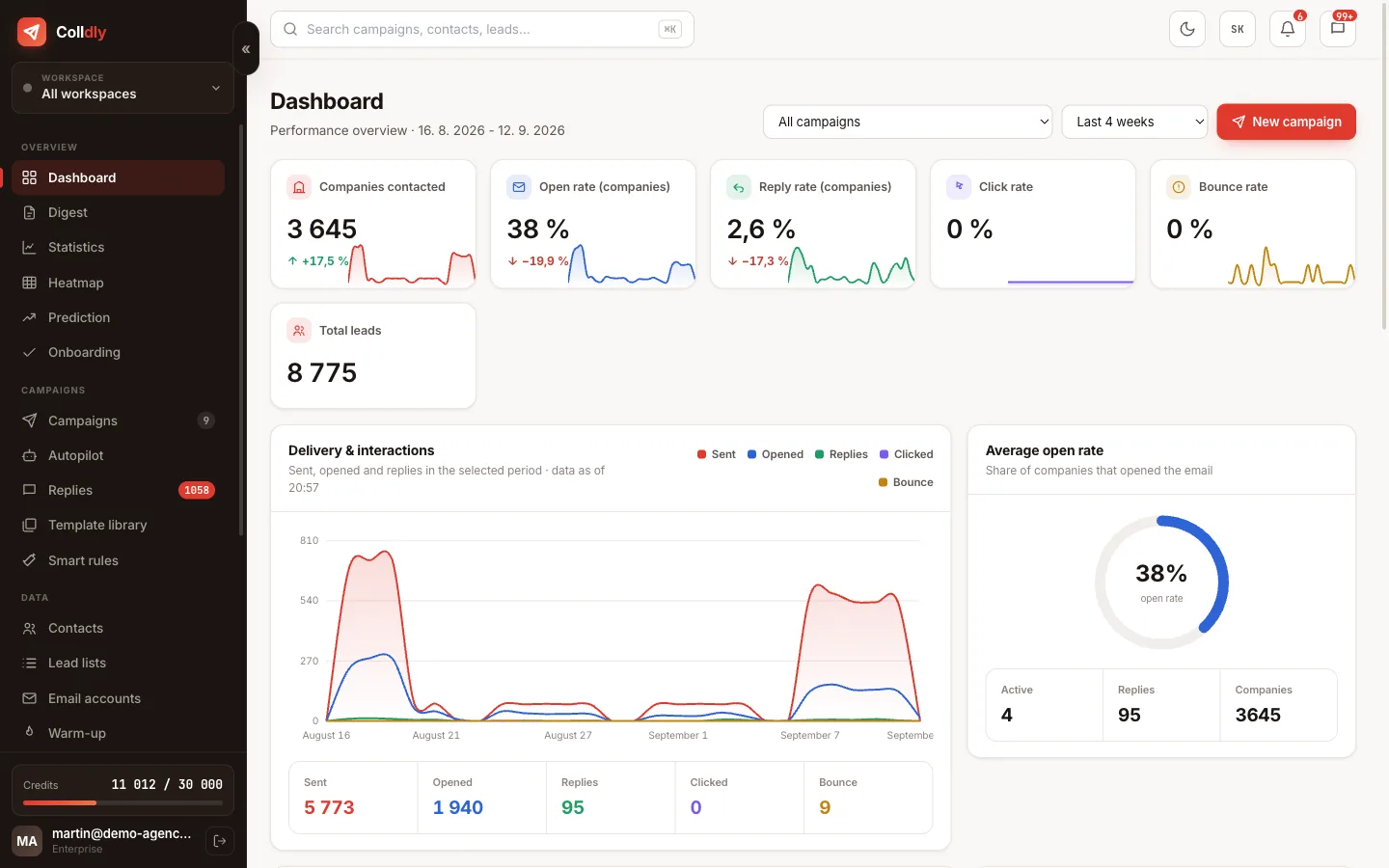
The best copy in the world will not save a bad target group. A campaign to "every company in the UK" gets 0.5% replies; a campaign to "independent garages in Greater Manchester with no online booking" gets 8%. The difference is not luck, it is who you write to.
This guide is about deriving the target from your own clients, narrowing it to one industry and area, and finding the signal that they need you right now.
Start from what you already have
Look at your three best clients. What do they have in common? Industry, size, region, the way they work? That is your target group, not the one you dreamed up.
Narrow it to one industry and region
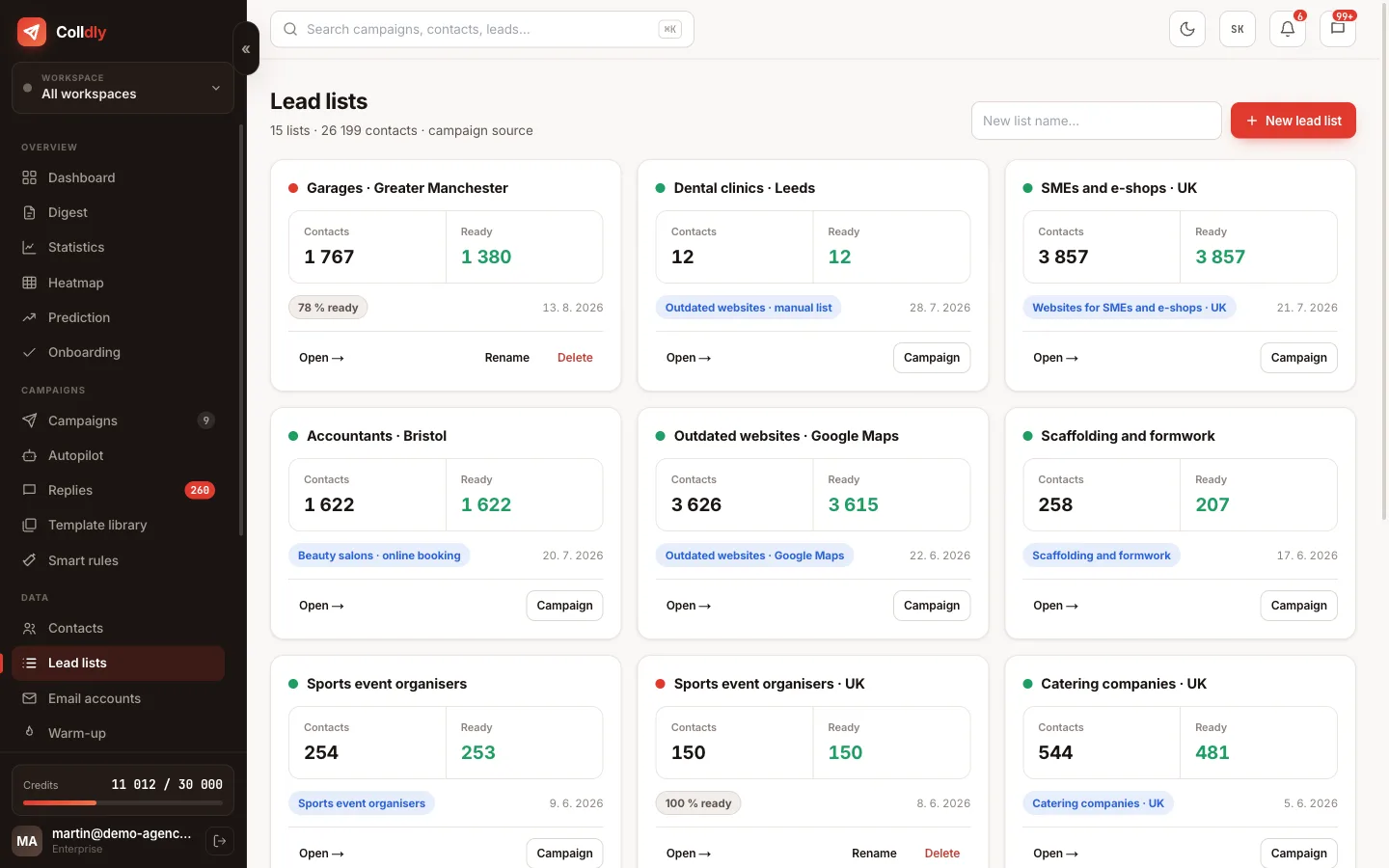
A campaign for "all companies in the country" does not work because it cannot be written specifically. "Joineries in one region" does: you know what troubles them and you can mention a reference from nearby.
Look for a signal that they need it now
The highest reply rates come from companies with a visible problem you solve. You build websites? Filter by website quality. You do social media? Use the profile audit. A signal turns you from a salesperson into someone who noticed.
Consider company size
A smaller company decides fast but has a smaller budget. A bigger one pays more, but more people decide and it takes months. Choose according to what you can handle and stick to it throughout the campaign.
Test on a small sample
The first 100 companies are a test, not a campaign. When five reply and two are interested, the segment fits and you can scale. When nobody replies, change the segment, not the subject line.
Write down what you learned
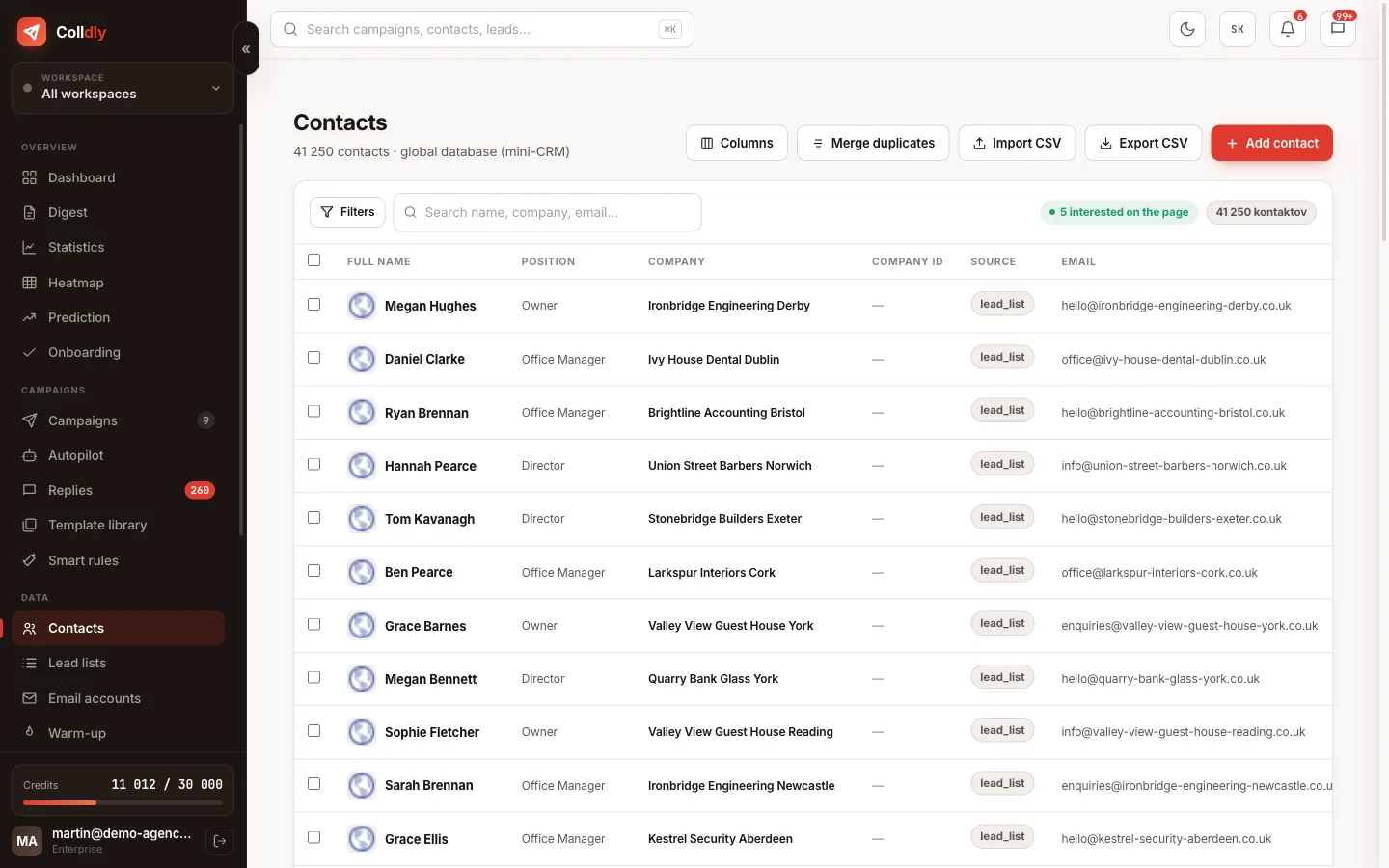
After every wave note which industry and which wording performed. After a few rounds you have your own map of the market that nobody can give you.
- The target group is derived from your three best clients, not from a feeling
- One industry, one area, one lead list
- You have a reason why now (old website, no socials, a new branch)
- Company size fits your price (a two-person shop will not buy at 5,000, a corporate will not answer cold email)
- You tested 100 to 200 companies before scaling
- You write down which industry and phrasing performed