All features
Sequences and follow-ups

Follow-ups that close deals while you sleep

Most replies do not come to the first email but to the second and third. Colldly sends follow-ups automatically, in the same thread, spaced according to your plan, and only to those who have not replied yet.

7 min read·4 chapters·5 questions
colldly.com/dashboard
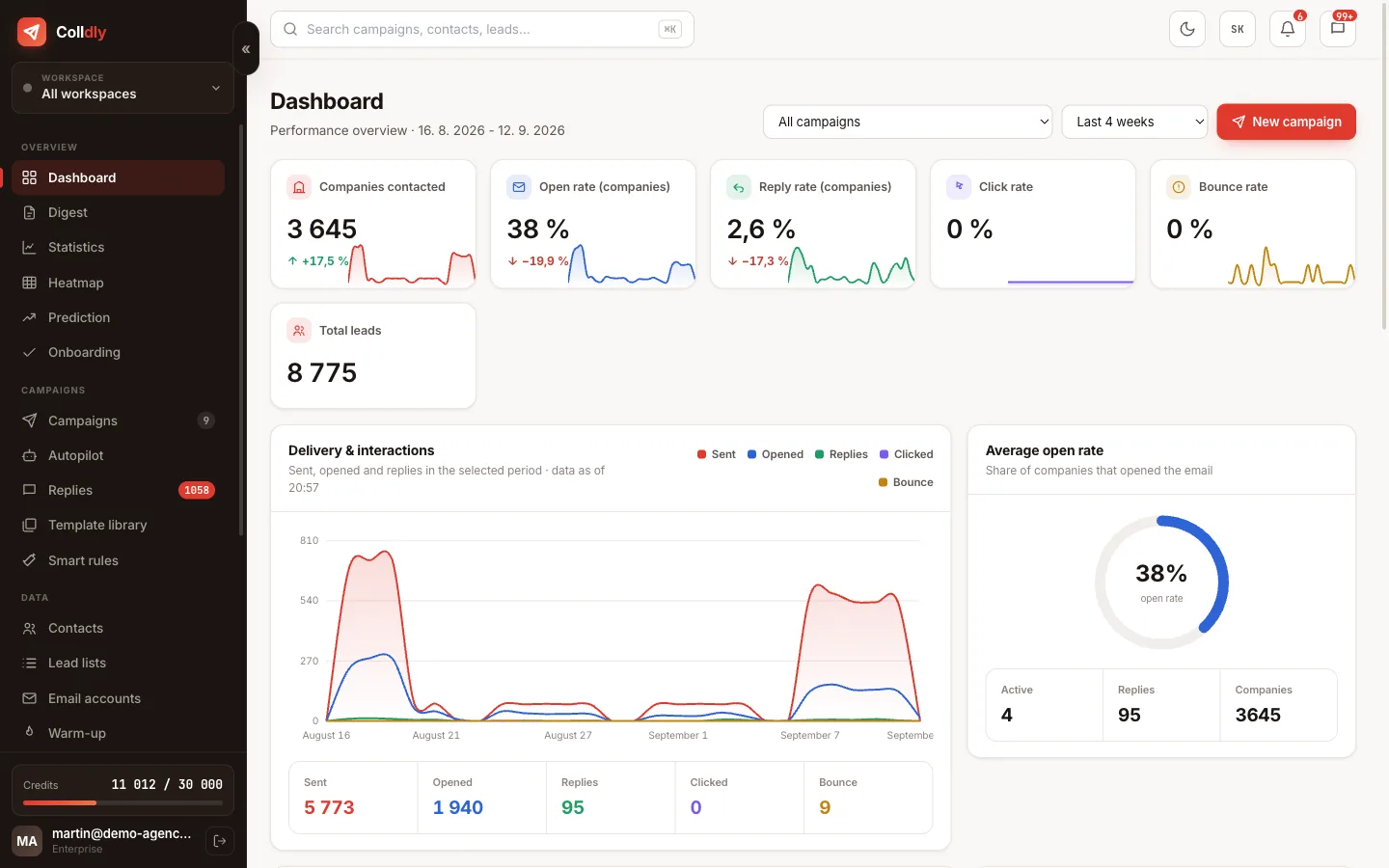
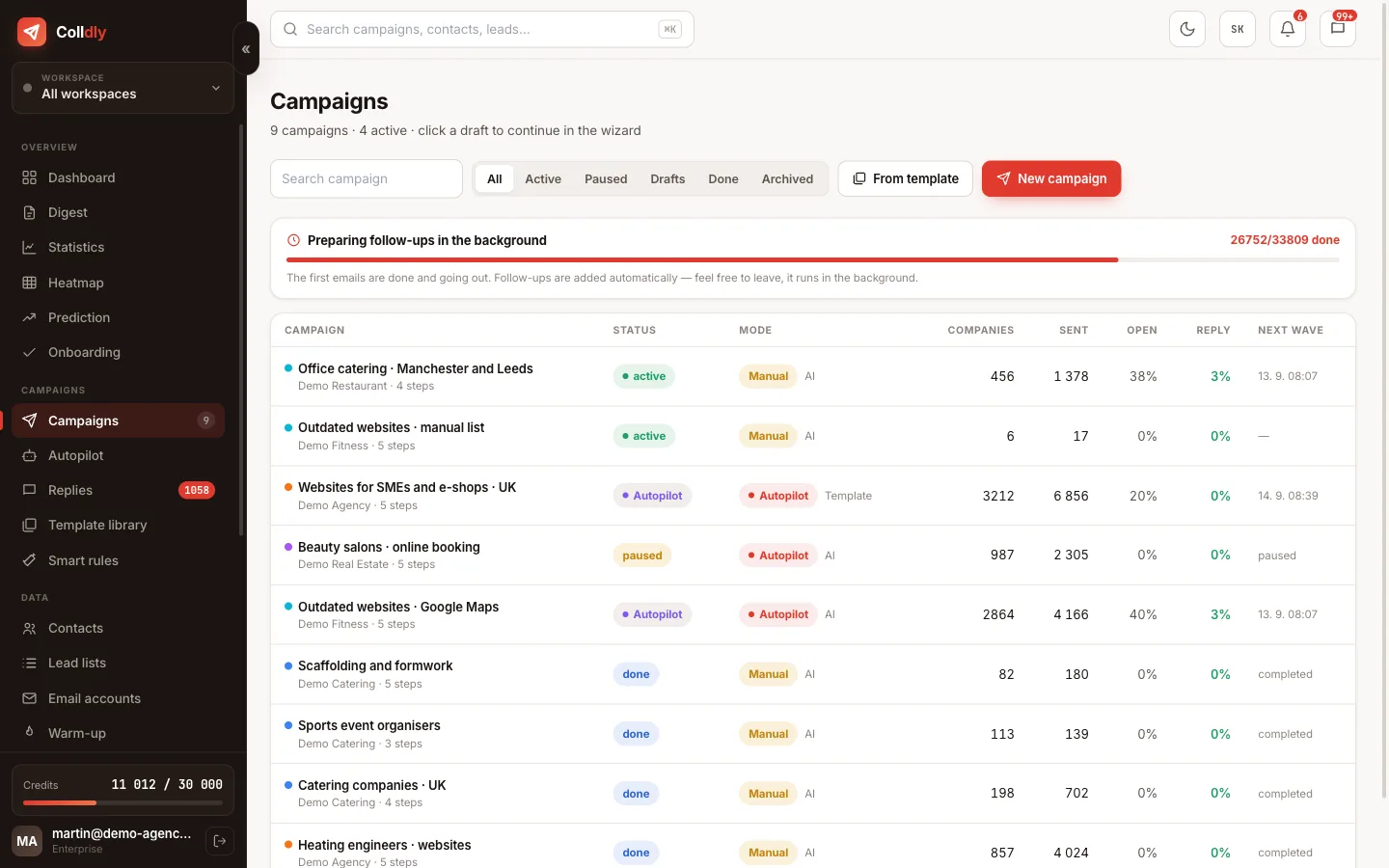
Campaigns in Colldly with multi-step sequences

If you had to do just one thing in cold email properly, it would be the follow-ups. The first email usually does not bring most of the replies; it arrives at a moment when the recipient's head is full of something else and it sinks without any ill intent.

The difference between a campaign that works and one that does not is usually whether anything came after the first email. And whether it was "just checking in" or something worth reading.

How a sequence works

A sequence is a planned series of emails to one company: first contact followed by follow-ups with the gaps you define. The system guards the order and timing and sends them within your sending window.

The key point is that follow-up emails go out as replies to the original message, that is in the same thread. The recipient sees the context of the previous communication and does not have to look anything up. The deliverability of a thread is also usually better than that of a separate new message.

The moment a company replies, the sequence ends for it immediately. Nobody receives an automatic reminder after they have already written, which is the fastest way to ruin a contact that is going well.

A proven four-step sequence

A frame that works across industries. The gaps get deliberately longer.
1
Day 0: first contact
The shortest email of the whole sequence. A personalised opening, one sentence about the offer and an undemanding call to action. No links or attachments.
2
Day 3: a concrete sample
Bring something tangible: a reference from the same industry or a short example of a result. Not the first email repeated in different words.
3
Day 7: a different angle
The same problem from the other side. If the first email talked about getting enquiries, this one can talk about the time that can be saved.
4
Day 14: the close
One or two sentences: "Shall I close this, or get back to you in a few months?" This step often has a surprisingly high reply rate because it offers a polite way to say no.
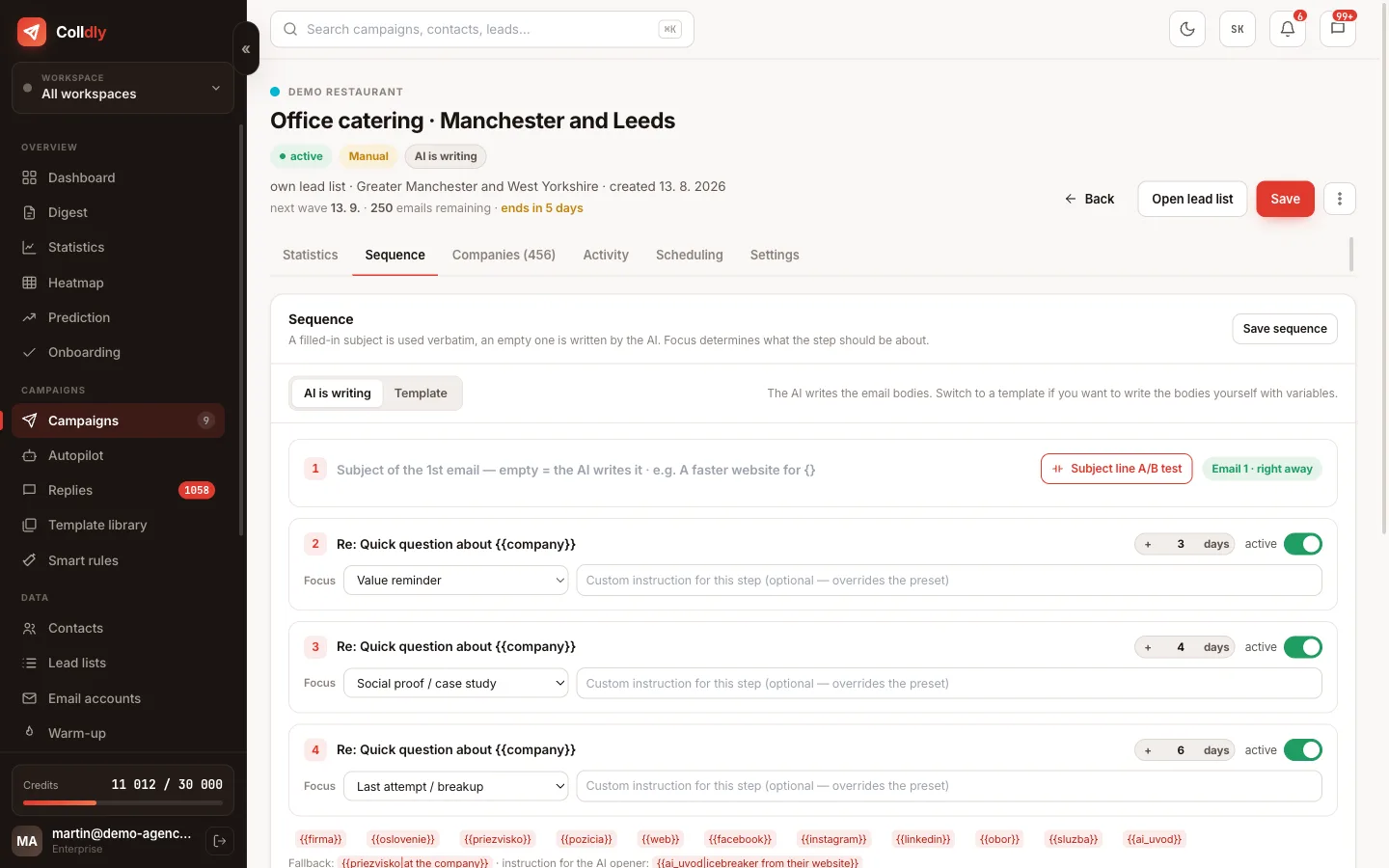
colldly.com/dashboard › Campaigns
Campaign detail in Colldly: sequence steps, gaps in days and follow-up focus
Each step has its own focus and gap; a reply from the company stops the sequence.
Tip: Do not underestimate the last step. People reply to an email that gives them an easy way to say no, and quite often it turns into "not now, but get back to us in January", which is more useful than silence.

What can be configured

Number of steps
From two up to an unlimited sequence depending on the plan. In practice three to five steps including the first email work best.
Gaps in days
Custom for every step. Gradually widening gaps feel more natural than an even spacing.
Step content
Every step can be generated by the AI or written from your own template with variables.
Sequence library
Save a proven sequence with its gaps and tone and launch the next campaign from it with one click.
Smart rules
The next step can adapt to the contact's behaviour: whoever opens the emails gets different copy than whoever ignores them.
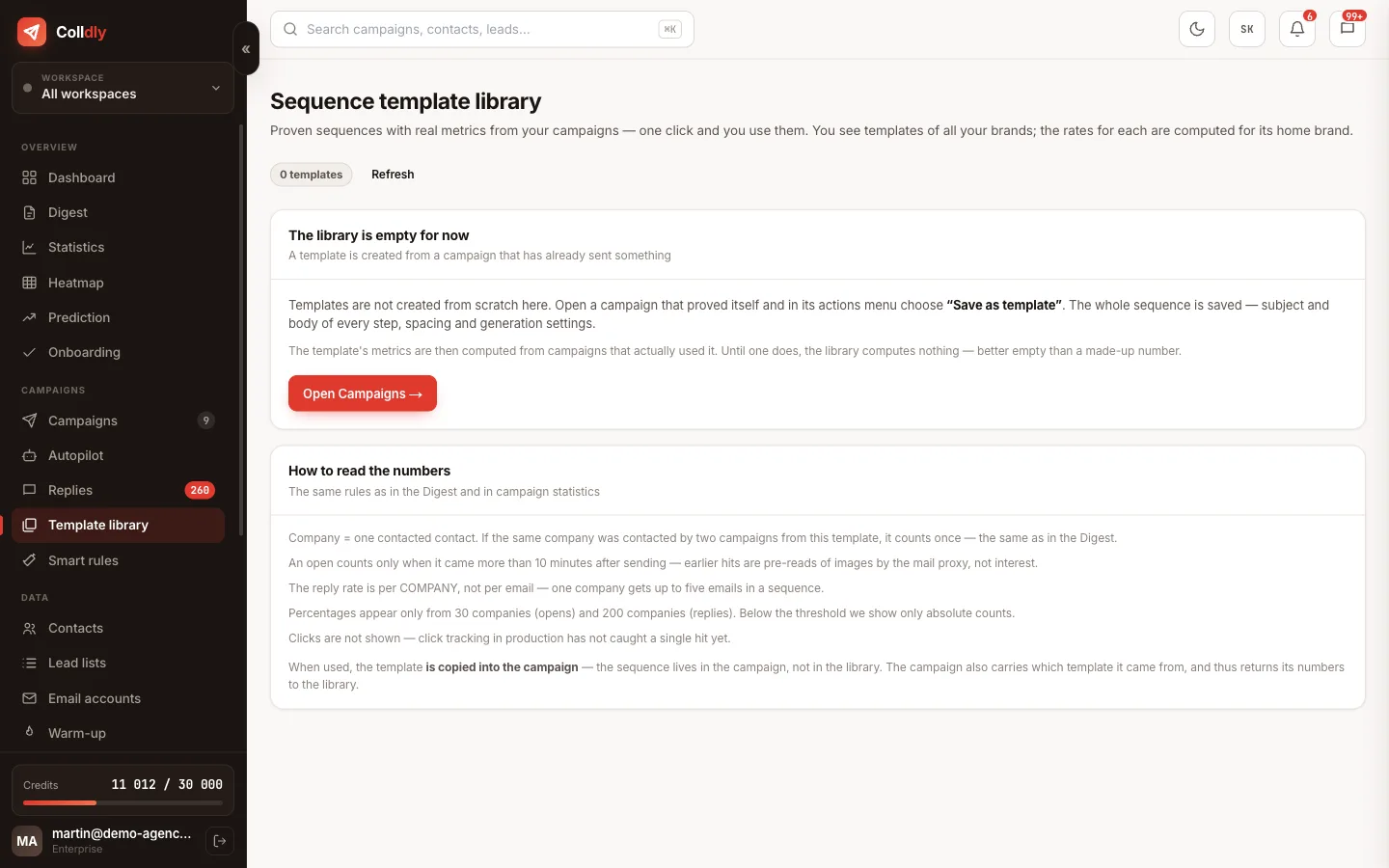
colldly.com/dashboard › Templates
Sequence library in Colldly with usage and reply metrics
Proven sequences go into the library and launch in the next campaign with one click.

How much is just right

Two follow-ups are the minimum below which it makes no sense to go; you would leave most replies on the table. Four to five steps are the upper limit beyond which unsubscribes grow faster than replies.

More important than the number is the content. A sequence of four emails where each brings something new works far better than three emails that only repeat the same request. When writing a step you cannot answer the question "why should this interest the recipient", it is better to skip the step.

What this feature does not do

So you know exactly what you are buying: these are deliberate limits, not bugs.

A sequence works no miracle with the wrong target group. When the segment does not need the offer, five emails will not change that.
Follow-ups are not generated in advance, so you cannot read the full text of a step scheduled two weeks ahead beforehand. You see the brief and the template, not the final copy.
An out-of-office auto-reply does not stop the sequence. That is intentional, but it means a person on holiday gets the next step after they return.

Frequently asked questions

Do follow-ups really go out in the same thread?

Yes, they follow as replies to the original message. The recipient sees them as a continuation of the conversation, not as a new email.

What if the company replies only after the third step?

The sequence ends at that moment and no further steps are sent. You find the reply in Unibox with the whole history.

Can I have different sequences for different segments?

Yes, the sequence is a property of the campaign. You can build a different one for every segment and save it to the library.

Do I pay credits for steps that are never sent?

No. Follow-ups are generated right before sending, so you do not pay for companies that replied in the meantime.

How long should a sequence last?

Usually two to three weeks from first contact. A longer span makes sense for more expensive services with a long decision cycle.

Related guides

Related features
Start today

Launch your first campaign this week.

200 trial credits, no card and no commitment. Your first campaign is live in 10 minutes and the first replies usually arrive within 48 hours.

Start for free
No credit card · First 200 credits free · Cancel anytime