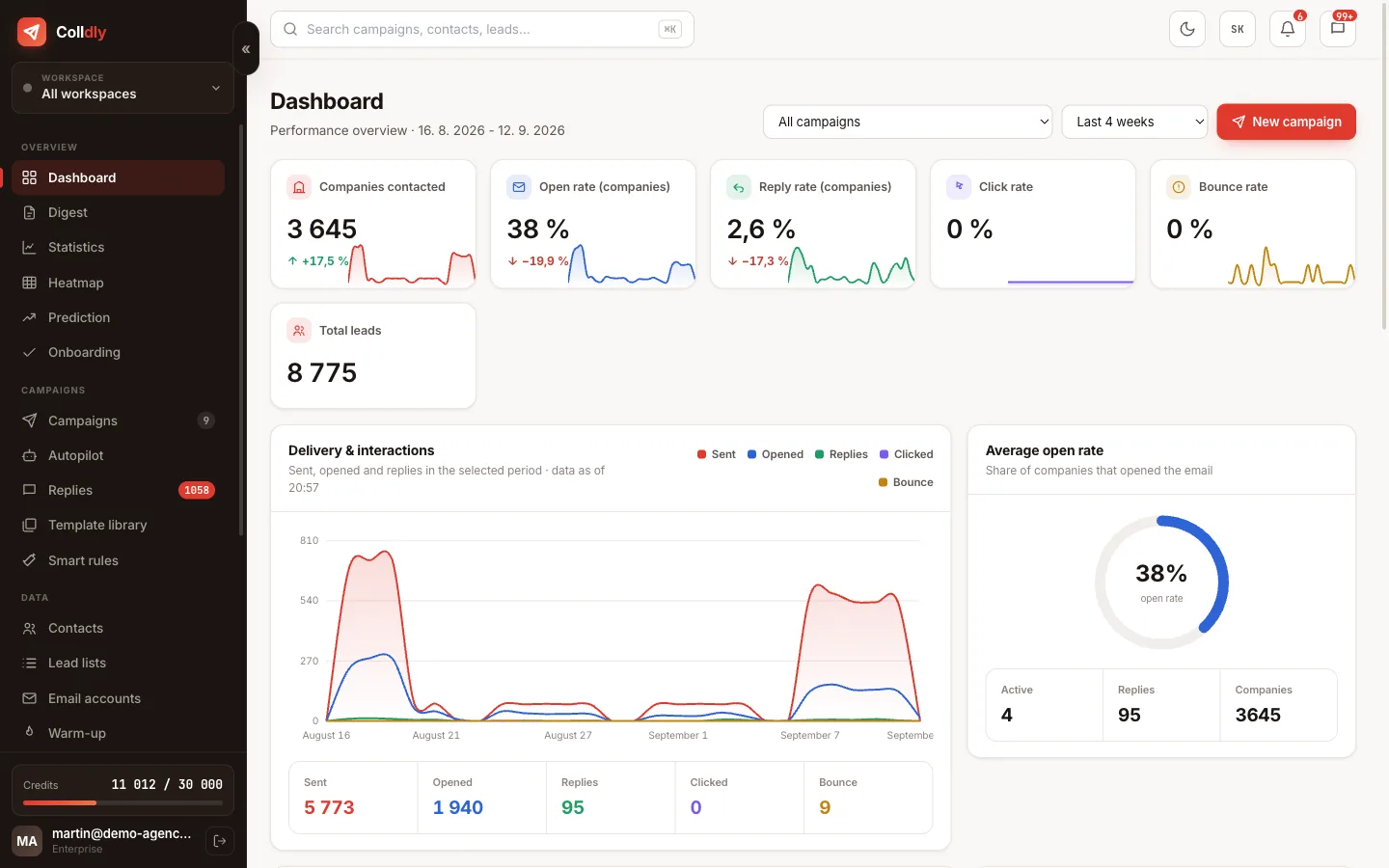
The most common problems are not in the law but in practice: emailing private addresses, missing unsubscribe links and ignoring objections. In the UK, PECR adds one more trap: sole traders and partnerships count as individuals.
Get these six steps right and you are in the same position as any company that phones or writes to potential business customers.
Contact business addresses
Write to companies (Ltd, PLC, LLP, GmbH, s.r.o.) at addresses published for business contact. Under UK PECR a limited company is a corporate subscriber and can be emailed without prior consent; a sole trader or partnership is treated as an individual and needs an opt-in or an existing relationship. Avoid personal gmail-style addresses.
Rely on legitimate interest
GDPR Article 6(1)(f): you have a genuine business reason (a relevant offer), the contact is proportionate and the recipient can object easily. Keep a short written balancing test in case of an audit.
Always say who is writing
Your name, company and postal address in the signature, and where you got the contact if asked. Transparency is a GDPR duty and also what makes the email look legitimate.
Give an easy way to opt out
An unsubscribe link in every email and one-click unsubscribe in the header (List-Unsubscribe), which Gmail and Yahoo require since 2024. A reply saying "please stop" counts as an objection too.
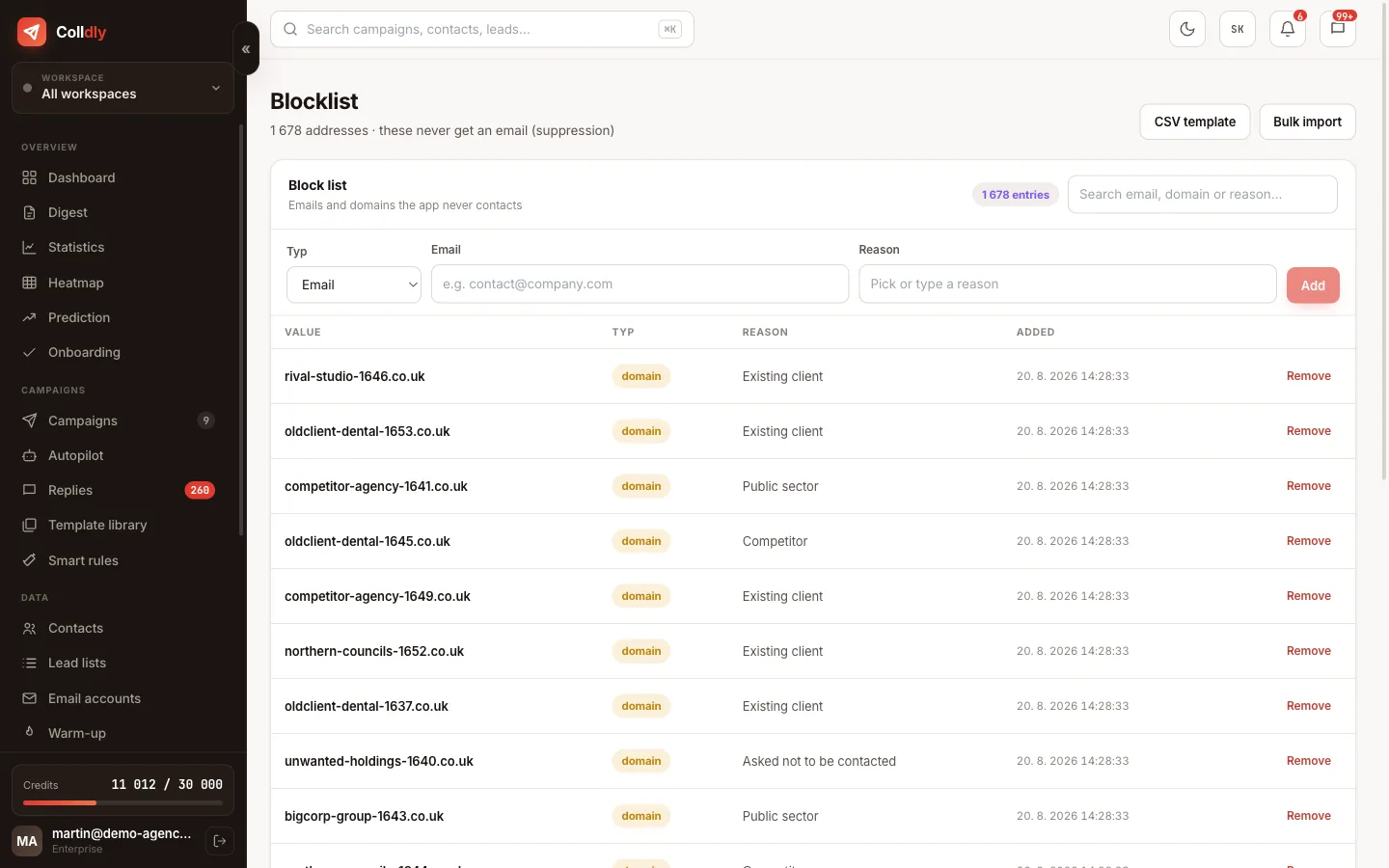
Respect objections immediately
An objection means the address goes on the suppression list for good, across all campaigns and brands. No "one last email".
Know where every contact came from
Store the source (Google Maps, website, import) with the contact. If someone asks, you answer in one sentence. Colldly stores the source on every company.
- You contact business addresses from public sources, not private ones
- You can justify legitimate interest (relevant offer, proportionate)
- Every email says who is writing and where the contact came from
- Unsubscribe is in every email and one click away in Gmail
- Objections are honoured immediately and the address goes on the blocklist
- You know the source of every contact (stored with the company)